












Find the word.Make the connection.
Your A–J reference for beads, findings, finishes and techniques. Clear explanations to help you choose your materials and keep creating.
Beads · Findings · Techniques
313 terms · Browse A–J by letter.
No matching A–J terms.
Try a shorter word, choose All topics, or look in Beading K–Z.
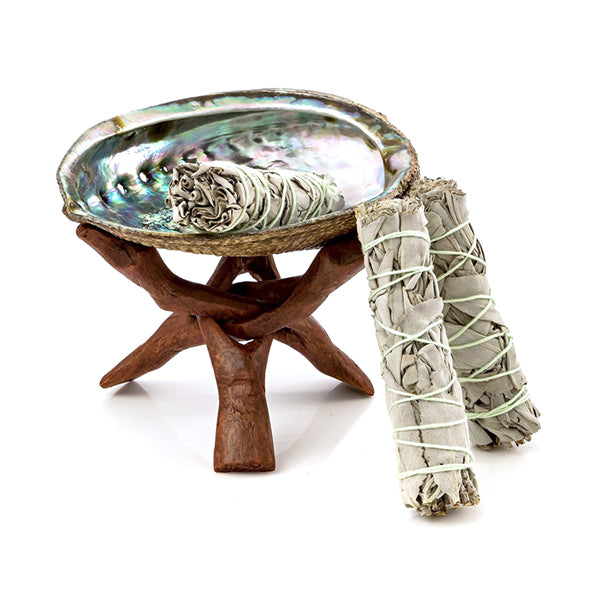
Abalone
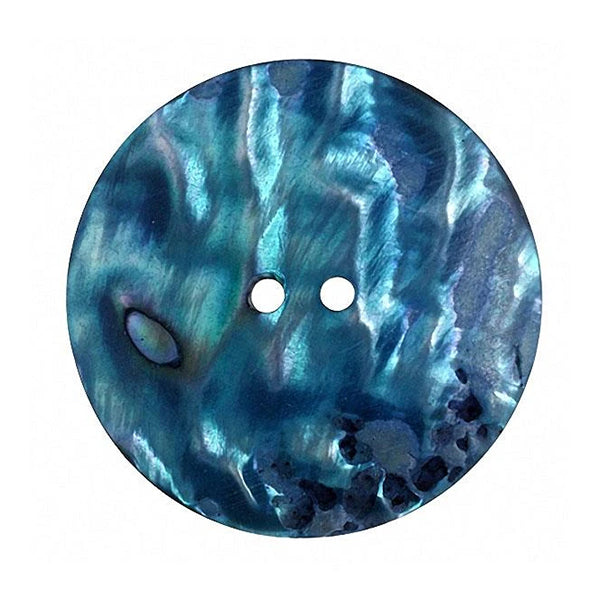
MaterialsA marine mollusc whose shell has an iridescent inner layer called nacre, or mother-of-pearl. Pieces of this shell are used for beads, cabochons and inlay.
Accent bead
Shapes & beadsA bead chosen to add contrast or detail through its colour, texture or shape. It can support the main focal bead without being the centrepiece.
Acid-washed
FinishesDescribes a surface treated with acid to change its texture, often giving glass a frosted appearance. The effect depends on the material and treatment.
Acrylic
MaterialsA lightweight plastic used for moulded beads and components. Acrylic beads can imitate glass, stone or other materials, but their care requirements differ.
Adhesive
Tools & suppliesGlue used to bond jewellery materials or secure certain knots. Choose a product compatible with the materials and follow its curing instructions; not every glue suits every thread or finish.
African trade beads
MaterialsBeads used in trade and adornment in African societies, including locally made and imported examples. Materials, origins and histories vary; some European trade beads are also associated with the transatlantic slave trade.
Agate
MaterialsA variety of chalcedony commonly showing bands or other patterns. Natural colours and dyed colours are both sold, so check the material and treatment description.
Aiko
Shapes & beadsTOHO’s precision cylinder bead range, used for detailed bead weaving. Follow the brand and size specified in your pattern when choosing a substitute.
Alabaster beads
MaterialsIn glass beads, alabaster describes a softly milky, translucent appearance. Natural alabaster is a separate carving material, commonly gypsum. Check the listed material to distinguish the two.
Alloy
MaterialsA metallic material made by combining a metal with other elements. Brass, bronze and sterling silver are examples; their properties depend on their composition.
Aluminium oxide
MaterialsA compound used as an abrasive for grinding and polishing. Its crystalline mineral form is corundum, the family that includes ruby and sapphire.
Amazonite
MaterialsA blue-green to green variety of microcline feldspar, often with pale streaks or patches. Its colour and pattern vary between pieces.
Amber
MaterialsFossilized tree resin used as a gem material. It is relatively light and can range from transparent to opaque. “Amber” can also describe a colour without identifying the material.
Amethyst
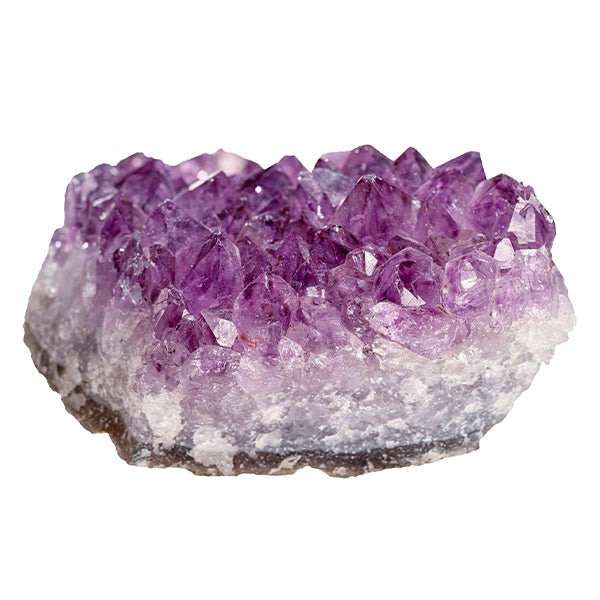
MaterialsThe purple variety of quartz. Its colour can range from pale lilac to deep purple, with lighter and darker areas in the same piece.
Anklet
Findings & jewelleryA piece of jewellery worn around the ankle. Allow enough room for movement when choosing its finished length.
Annealing
TechniquesControlled heating and cooling used to change a material’s properties. In glass it relieves internal stress; in many jewellery metals it restores softness after work-hardening. The procedure depends on the material.
Antique beads
MaterialsBeads described as being at least 100 years old. Age and origin need supporting information; an antique appearance or finish alone does not establish age.
Antiqued / antique finish
FinishesA treatment that gives a bead or component an aged appearance, often by darkening recesses. It describes the finish, not the age of the item.
Apatite
MaterialsA group of phosphate minerals used as gemstones in several colours. Apatite is the reference mineral for Mohs hardness 5, so protect it from scratches and knocks.
Appliqué
TechniquesAttaching a decorative piece or motif to a fabric or leather base. In beadwork, a beaded motif may be stitched onto a backing or finished item.
Aquamarine
MaterialsThe blue to greenish-blue variety of beryl. Beads can be transparent, translucent or included; colour and clarity vary between pieces.
Aragonite
MaterialsA calcium carbonate mineral used for beads and carvings. It is relatively soft and occurs in several colours, including white and brown.
Aught
MeasurementsThe zero in seed bead size labels such as 11/0, also written 11°. Within the same bead range, a higher number generally means a smaller bead. It is not a universal millimetre measurement.
Aurora Borealis (AB)
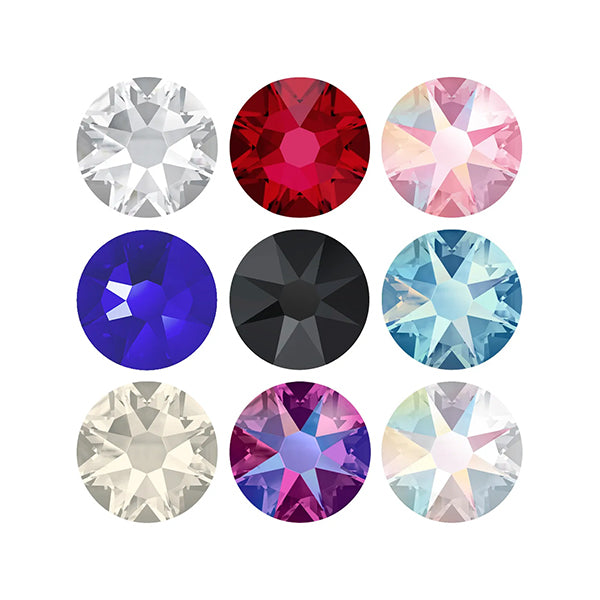
FinishesAn iridescent coating that adds rainbow reflections to glass or crystal. Coverage and durability depend on the product; AB is not a promise that a finish cannot wear.
Aventurina
MaterialsAventurine glass: manufactured glass with sparkling metallic crystals, often copper. Also called goldstone in bead supplies. It is different from natural aventurine quartz.
Aventurine
MaterialsA quartz-rich gem material with reflective mineral inclusions that create a glittering effect. Green is familiar, but other colours occur. It is different from aventurine glass or goldstone.
Awl
Tools & suppliesA pointed tool used for positioning knots, piercing suitable soft materials or guiding work. A bead reamer is the more appropriate tool for smoothing a bead hole.
Azurite
MaterialsA deep blue copper carbonate mineral, often found with green malachite. It is soft and needs gentle handling when used in jewellery.
Backstitch
TechniquesAn embroidery stitch that steps backward to secure a line of beads to fabric or backing. The number of beads picked up and stitched through depends on the design.
Baguette
Shapes & beadsA long rectangular shape, especially a step-cut gemstone or crystal. Some baguettes have tapered sides. The name describes the shape or cut, not a particular material.
Bail
Findings & jewelleryA connector that lets a pendant hang from a chain or cord. Styles include pinch, glue-on and hinged bails; match the bail to the pendant and stringing material.
Bakelite
MaterialsA trade name for an early phenolic plastic associated with vintage jewellery. Appearance alone is not enough to identify it; avoid damaging tests on a collectible piece.
Bali silver
MaterialsSilver jewellery and components associated with Bali, Indonesia, often featuring detailed ornament. Check the stated silver fineness and origin; “Bali-style” describes a look rather than where an item was made.
Bangle
Findings & jewelleryA rigid bracelet that slips over the hand or opens with a hinge or clasp. Bangles can be made from metal, glass, plastic, wood and other materials.
Bar-and-ring clasp
Findings & jewelleryA toggle clasp with a bar that passes through a ring and turns across it to close. Its proportions and the fit of the finished jewellery affect how securely it stays fastened.
Baroque beads
Shapes & beadsBeads with an irregular, non-symmetrical shape. The term is especially common for pearls, but also describes manufactured bead shapes.
Barrel beads
Shapes & beadsBeads shaped like a short barrel, usually with rounded sides and flatter ends. They can be made from many different materials.
Barrel clasp
Findings & jewelleryA clasp with a barrel-like body. It may close with a screw, magnet or another mechanism; check the specific style before choosing it for a project.
Barrette
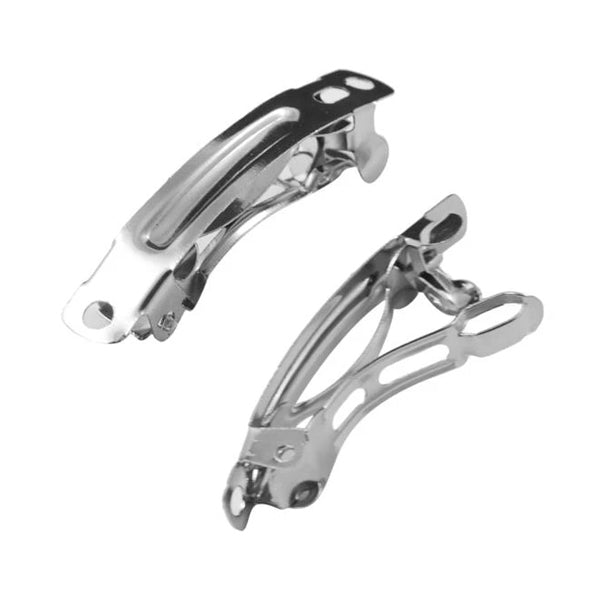
Findings & jewelleryA hair fastener with a decorative top and a clip or clasp underneath. A barrette blank provides a base for beadwork or other decoration.
Base metal
MaterialsA non-precious metal such as copper, brass or iron, often used as the core beneath plating. The term does not identify a particular alloy or confirm its nickel content.
Bead board
Tools & suppliesA work surface with grooves and compartments for planning a strung design. Its markings help estimate length, but check the finished fit with your clasp and bead sizes.
Bead cap
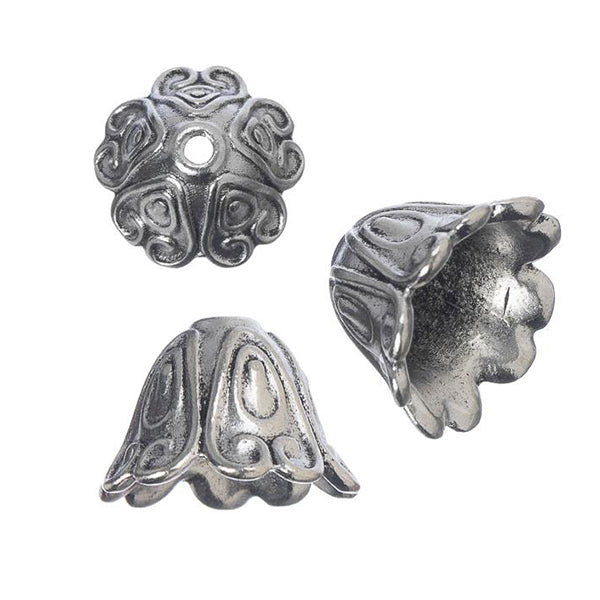
Findings & jewelleryA decorative cup or shaped component that sits against a bead. It frames the bead and may conceal a large hole or the end of a strand.
Bead cement
Tools & suppliesAn adhesive sold for jewellery work. Its suitability depends on the materials being joined and the product instructions.
Bead clasp
Findings & jewelleryA clasp designed to resemble a bead or to sit inside one. The closing mechanism may be a screw, magnet or another type of fastener.
Bead cones
Findings & jewelleryCone-shaped findings that gather and conceal strand ends. The strands still need a secure attachment inside the cone.
Bead crimping tool
Tools & suppliesPliers designed to close compatible crimp beads or tubes around beading wire. Match the tool, crimp and wire sizes.
Bead crochet
TechniquesCrochet that incorporates beads into the stitches. Beads may be pre-strung or added during the work, depending on the technique.
Bead embroidery
TechniquesStitching beads onto a fabric, leather or other backing to form a design. The backing supports the beadwork.
Bead knitting
TechniquesKnitting that incorporates beads into the fabric. Beads may be pre-strung or added to individual stitches as the work progresses.
Bead loom
Tools & suppliesA frame that holds lengthwise warp threads under tension while beads are woven between them with a crosswise weft thread.
Bead mat
Tools & suppliesA soft work surface that helps keep loose beads from rolling. Mats also make small beads easier to pick up with a needle.
Bead reamer
Tools & suppliesAn abrasive tool used to smooth rough bead holes or make small adjustments to an opening. Use the correct tip and method for the material; excessive pressure can break a bead.
Bead stopper
Tools & suppliesA temporary clip or spring used to hold beads on a strand while you work. Remove it when adding the final clasp or other fastening.
Bead tip
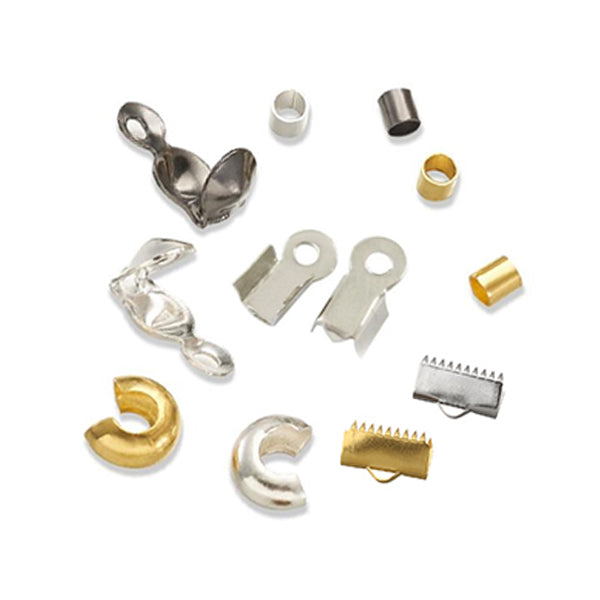
Findings & jewelleryA small finding that conceals a strand-end knot, or a suitable crimp in some designs, and provides a connection to a clasp. Often called a calotte or clamshell.
Bead weaving
TechniquesJoining beads into a structure with thread, on a loom or with off-loom stitches such as brick stitch and herringbone. The beads form the fabric of the work.
Beaded bead
Shapes & beadsA three-dimensional bead made by stitching smaller beads together. Some designs cover a base bead; others support their own shape.
Beading cones
Findings & jewelleryCone-shaped findings used to cover and gather the ends of several strands. Also called bead cones or end cones.
Beading needle
Tools & suppliesA slender needle made to pass through bead holes. Needle sizing varies by range; check the eye, thread thickness and the space left after repeated passes.
Beading thread
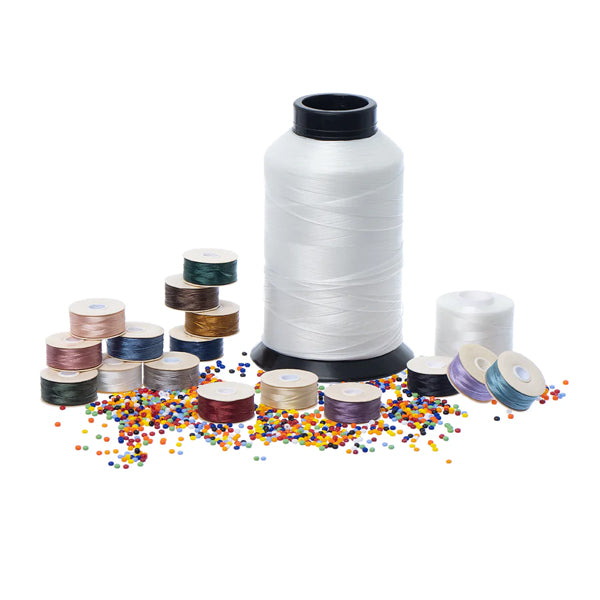
Tools & suppliesThread chosen for stitching or stringing beads. Materials, thickness, stretch and abrasion resistance vary; match it to the bead holes, technique and number of thread passes.
Beading tweezers
Tools & suppliesFine tweezers used to handle small components, position beads or help place knots. Choose tips that suit the task and avoid damaging delicate finishes.
Beading wire
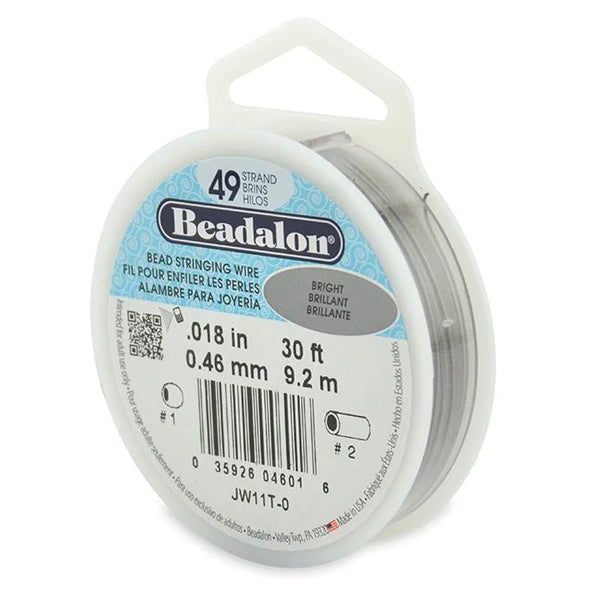
Tools & suppliesFlexible cable made from multiple fine metal strands, often with a nylon coating. Usually secured with compatible crimps. It differs from the single wire used for loops and wire wrapping.
Beads
Shapes & beadsSmall decorative objects with one or more holes for stringing, stitching or attachment. They can be made from glass, metal, stone, shell, wood, plastic and many other materials.
Beadwork
TechniquesA broad term for objects or decoration made with beads, including weaving, embroidery, stringing and bead crochet.
Beeswax
Tools & suppliesA natural wax sometimes used to condition beading thread. Use sparingly and only where appropriate for the thread; excess wax can build up around bead holes.
Beggar beads
Shapes & beadsA trade name used for large, irregular stone beads, often agate. The name alone does not establish their material, age or origin.
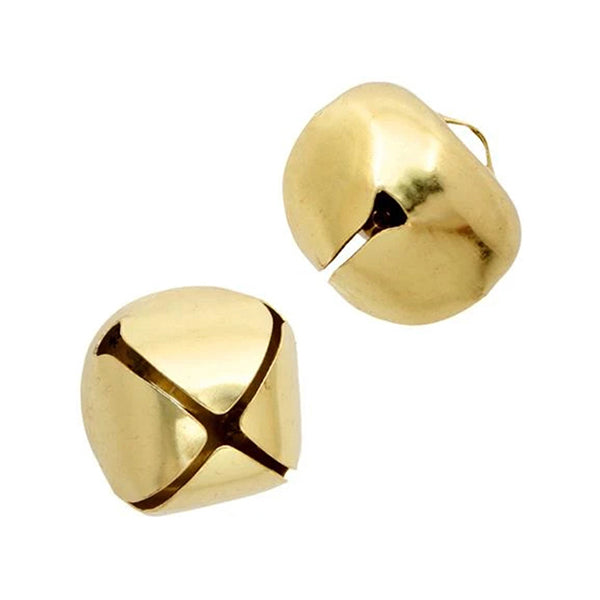
Bell cap
Findings & jewelleryA bell-shaped cap used to frame or attach a bead or pendant. Some styles have flexible tabs and an attachment loop; choose the size and fastening method for the piece.
Bent chain-nose pliers
Tools & suppliesPliers with angled, tapered jaws for gripping small components and working in tight spaces. The bend offers a different approach angle from straight chain-nose pliers.
Bezel
Findings & jewelleryA rim or setting that surrounds a stone to hold it in place. A beaded bezel uses stitched beads around a cabochon or crystal instead of a metal rim.
Bicone beads
Shapes & beadsBeads shaped like two cones joined at their widest ends. Faceted crystal bicones are a familiar example, but the shape can be made in other materials.
Birthstones
MaterialsGemstones traditionally associated with birth months. Lists differ by tradition and country. Their associations are symbolic rather than a measure of a stone’s physical properties.
Biwa pearls
MaterialsFreshwater cultured pearls originating from Japan’s Lake Biwa. The name is sometimes used loosely for elongated pearl shapes, so check the stated origin and pearl type.
Black-lined
FinishesA glass bead with a black layer inside its hole. The lining affects the apparent depth and colour seen through the glass.
Bloodstone
MaterialsA usually dark green variety of chalcedony with red spots or patches, also called heliotrope. The red markings are associated with iron oxides.
Body jewellery
Findings & jewelleryJewellery worn on different parts of the body, including piercing jewellery and non-piercing ornaments. Material and design requirements depend on how it will be worn.
Bohemian glass
MaterialsGlass associated with Bohemia, a historic region in today’s Czech Republic. The name reflects a glassmaking tradition, not a guarantee of one composition or manufacturing method.
Box clasp
Findings & jewelleryA clasp in which a tab or tongue fits into a box-shaped housing. Some include an extra safety catch; the size and mechanism determine suitable uses.
Bracelet
Findings & jewelleryJewellery worn around the wrist. Finished fit depends on wrist size, bead diameter, construction and clasp, so test the complete design rather than using one fixed allowance.
Brass
MaterialsAn alloy primarily of copper and zinc. Its colour and working properties depend on the proportions and any additional elements.
Breloque
Findings & jewelleryA small decorative charm or pendant, especially one suspended from a chain or watch chain.
Brick stitch
TechniquesAn off-loom stitch in which beads sit in staggered rows like bricks. New beads are usually anchored to the thread bridges of the previous row.
Brilliance
MeasurementsThe brightness produced by light returning from a gem. Cut, material and polish affect it; adding more facets does not automatically make a stone brighter.
Briolette
Shapes & beadsA faceted, pear-shaped gem or bead, often drilled near its narrow end for suspension. Smooth drops have a similar outline but do not have the same faceted cut.
Bronze
MaterialsA family of copper alloys traditionally made with tin. In product colours, “bronze” may describe an appearance without identifying the underlying metal.
Bronzite
MaterialsA brown, iron-bearing variety of enstatite, a pyroxene mineral. Polished pieces can show a bronze-like sheen.
Brooch
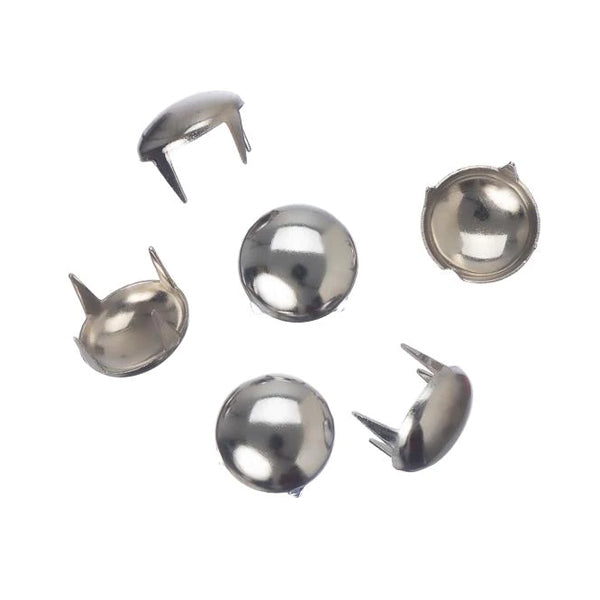
Findings & jewelleryA decorative ornament attached to clothing with a pin or other fastening. “Broach” is sometimes encountered as a variant spelling in jewellery descriptions.
Brooch back / brooch pin
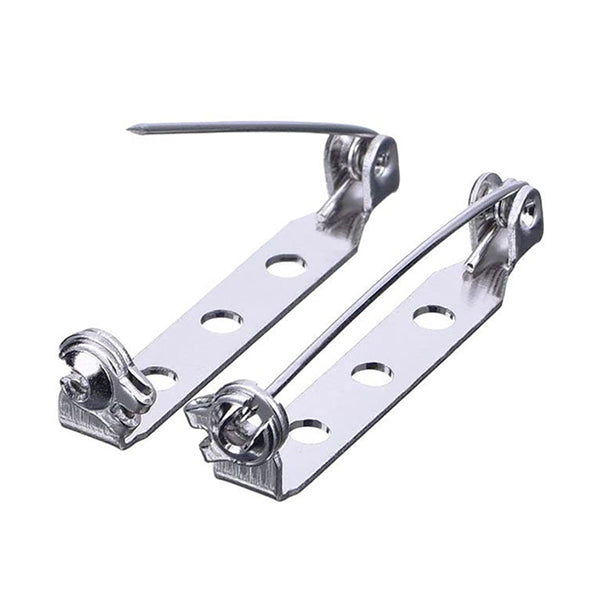
Findings & jewelleryThe pin-and-catch finding used to fasten a brooch to clothing. Some have a flat base for attaching beadwork, fabric or other decoration.
Bugle beads
Shapes & beadsElongated tube-shaped beads, commonly glass. Check both length and width, and inspect the ends for rough edges that could abrade thread.
Bullion
Tools & suppliesIn bead stringing, another name for French wire: a fine coil used to protect thread at a clasp. In metal trading, bullion has a different meaning.
Butterfly stopper
Findings & jewelleryAn earring back that grips a straight earring post, often with two curled wings. Also called a butterfly back or friction back.
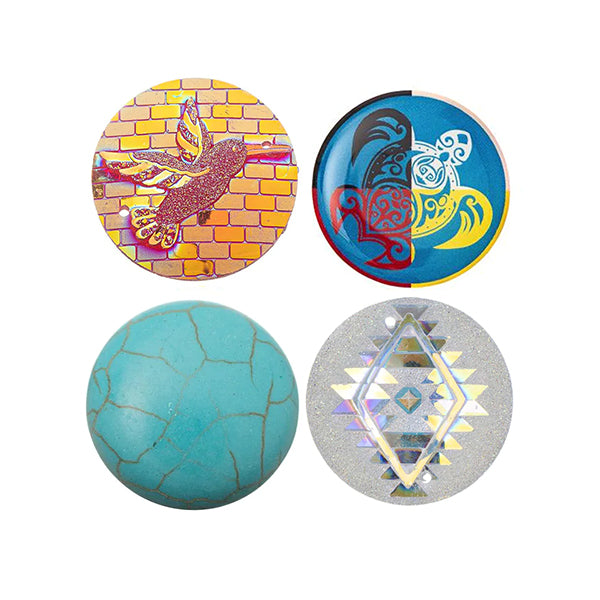
Cabochon
Shapes & beadsA gem or decorative piece with a polished, unfaceted surface, usually domed with a flat back. It is commonly set, glued or enclosed in beadwork rather than strung through a hole.
Cagework
TechniquesJewellery construction in which beads or other decorative elements are wired onto an open metal framework. A pierced metal stamping can serve as the base.
Calcite
MaterialsA calcium carbonate mineral and the reference for Mohs hardness 3. It is soft and can split along cleavage planes, so handle calcite beads gently.
Calipers / callipers
Tools & suppliesA measuring tool with jaws for checking dimensions such as bead width, wire thickness or internal openings. The tool’s resolution is not necessarily its measurement accuracy.
Calotte
Findings & jewelleryA bead tip or clamshell finding that folds around a knot or suitable strand ending. Its loop connects the strand to a clasp or jump ring.
Cameo
Shapes & beadsA raised design carved or moulded above its background. Cameos may be made from shell, stone, glass or resin; a contrasting background helps the design stand out.
Candy glass beads
Shapes & beadsA trade description often used for colourful cane or furnace-glass beads. Check the individual bead’s construction and dimensions.
Cane glass beads
Shapes & beadsBeads made using glass rods or tubes called canes, which may contain coloured patterns. The cane can be cut into sections or worked further.
Carat
MeasurementsA unit of gemstone mass: 1 carat equals 0.2 gram. Gold purity is a separate measurement, usually written karat or K in North America.
Carbon steel
MaterialsSteel in which carbon is an important alloying element. Its hardness, toughness and corrosion resistance depend on the grade and treatment.
Carnelian / cornelian
MaterialsAn orange to reddish-brown variety of chalcedony. Beads may be treated to enhance colour, so consult the product’s treatment information.
Cartouche
Findings & jewelleryA decorative panel or frame for a name, inscription or motif. The term is associated with the oval enclosure around royal names in ancient Egyptian writing.
Cathedral beads
Shapes & beadsFaceted glass beads with decorative ends that resemble caps. A contrasting surface finish often remains at the ends while the facets reveal the underlying glass.
Cat’s-eye beads
MaterialsBeads displaying a narrow band of light across the surface. Many are manufactured fibre-optic glass; natural gemstones can also show a cat’s-eye effect. The effect alone does not identify the material.
Celluloid beads
MaterialsBeads made from an early cellulose-based plastic found in vintage jewellery. Celluloid is heat-sensitive and flammable; do not use a hot-needle or flame test to identify it.
Ceramic
MaterialsMaterial made by firing clay or other mineral mixtures. Ceramic beads may be glazed, painted or left unglazed; porcelain and earthenware are examples.
Ceylon beads
FinishesA name used for pearl-like glass bead finishes. The combination of glass, lining and surface treatment varies by manufacturer, so use the brand’s colour description.
Chain
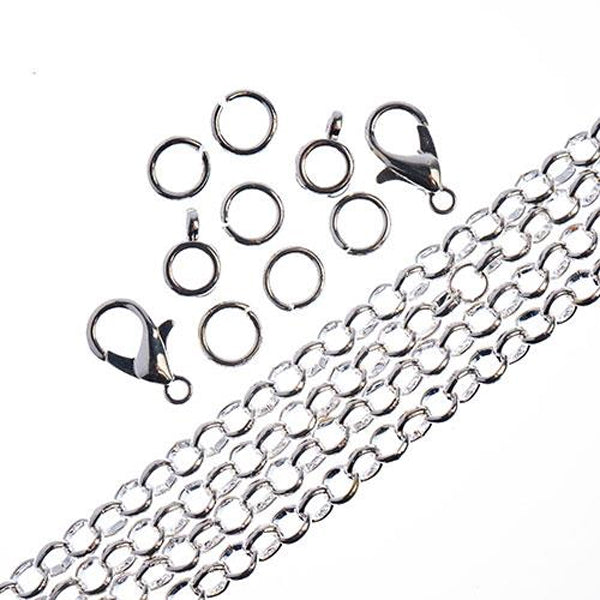
Findings & jewelleryA flexible series of connected links used for necklaces, bracelets, extensions and decorative details. Link shape, construction and material affect its strength and drape.
Chain extender
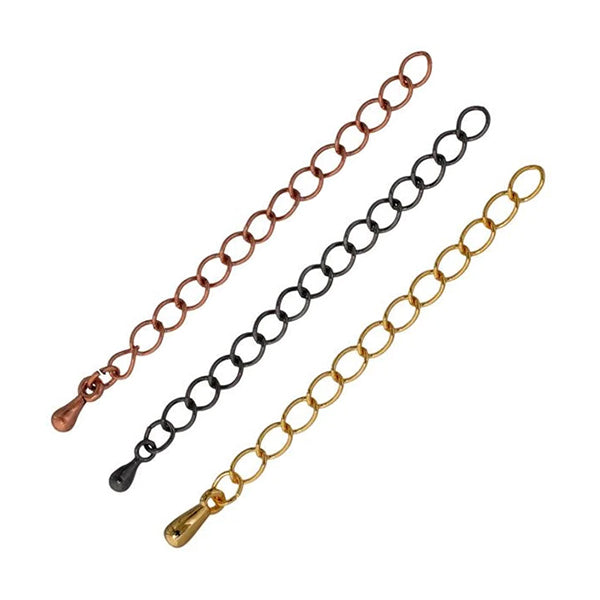
Findings & jewelleryA short chain added near a clasp to provide adjustable length. Its links must fit the clasp securely.
Chain maille
TechniquesInterlocking rings joined in repeating patterns to form flexible jewellery or decorative mesh. Ring size and wire thickness affect whether a particular weave fits together.
Chain tag
Findings & jewelleryA small end tab or plate used to connect a chain to a clasp. Some also carry a maker’s mark or material stamp.
Chain-nose pliers
Tools & suppliesPliers with tapered jaws, usually flat on the inside, for gripping and bending wire or opening jump rings. They do not necessarily include a cutter.
Chalcedony
MaterialsA fine-grained silica gem material. Agate and carnelian are familiar varieties; colour, transparency and pattern vary widely.
Chandelier finding
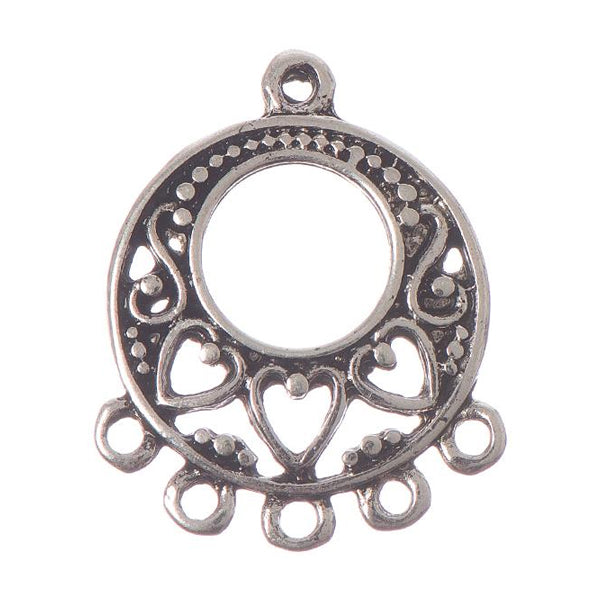
Findings & jewelleryA decorative connector with several attachment loops for hanging beads or chains. Often used for earrings with multiple drops.
Charlotte beads
Shapes & beadsSmall rounded seed beads with one or more small facets for sparkle. TOHO describes its Charlotte as single-cut; Preciosa’s size 13/0 Charlottes have one or two facets. Check the particular range.
Charlotte crimps
Findings & jewelleryA supplier term often used for clamshell-style bead tips that enclose a strand ending. These are different from the small crimp tubes that grip beading wire.
Charm
Findings & jewelleryA small decorative ornament with an attachment point. Charms can hang from bracelets, necklaces, earrings or other accessories.
Charm bracelet
Findings & jewelleryA bracelet designed to carry charms. The charms may be decorative, personal keepsakes or symbols of interests and milestones.
Charm hanger
Findings & jewelleryA connector designed to hold one or more charms on a chain or cord. Some open like a clasp to let charms be changed.
Chasing hammer
Tools & suppliesA jewellery hammer with a broad face for striking chasing tools or working metal. Many have a rounded opposite end for texturing; choose the face suited to the task.
Chaton
Shapes & beadsA faceted jewellery stone, commonly round with a pointed back, made to fit a setting. It is usually undrilled; check the specified setting and backing for the product.
Chevron beads
Shapes & beadsLayered glass beads with a star-like pattern visible at their ends. Grinding the ends exposes the contrasting glass layers. Also called rosetta or star beads.
Chinese crystal beads
MaterialsCrystal or faceted glass beads manufactured in China. The country of origin alone does not establish composition, lead content, cutting quality or durability; check the particular product.
Chlorite
MaterialsA group of sheet-silicate minerals, often green. Chlorite can occur as inclusions in other gem materials, including quartz.
Choker
Findings & jewelleryA necklace worn close around the neck. The required length depends on the wearer, bead size and design, so there is no single measurement that fits everyone.
Chrysoberyl
MaterialsA beryllium aluminium oxide mineral used as a gemstone. It includes cat’s-eye chrysoberyl and colour-changing alexandrite. Despite its name, it is not a variety of beryl.
Chrysocolla
MaterialsA blue to green copper-bearing mineral material. It is soft in its own right, but may occur mixed with harder minerals such as quartz; the material’s composition affects its durability.
Chrysoprase
MaterialsAn apple-green to deeper green variety of chalcedony, coloured by nickel-bearing material. It can be translucent to nearly opaque.
Chrysotine
MaterialsA name found in some bead suppliers’ listings. Do not use it alone to identify a mineral or assume the bead is turquoise; ask for the actual material and any treatments.
Cinnabar
MaterialsA red mercury-sulphide mineral. “Cinnabar-style” beads may instead be carved lacquer or moulded resin, so verify the material. Natural cinnabar should not be drilled, sanded or heated in a home jewellery project.
Citrine
MaterialsThe yellow to orange-brown variety of quartz. Many commercial stones obtain their colour through heat treatment. Citrine and topaz are different gem materials.
Clamp / cramp
Findings & jewelleryTerms sometimes used for a metal claw or prong that holds a stone in a setting. Check the component drawing or description, since terminology varies.
Clamshell
Findings & jewelleryAnother name for a two-part bead tip that folds around a knot or suitable strand ending.
Clarity
MeasurementsThe degree to which a gemstone is free of internal inclusions and surface blemishes. Its significance depends on the gem and the type, size and position of those features.
Clasp
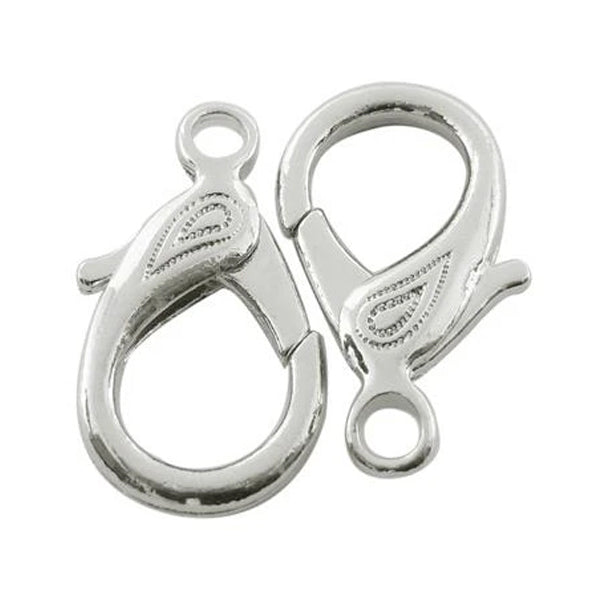
Findings & jewelleryA fastening that joins the ends of a necklace, bracelet or other piece. Choose its style, strength and size to suit the design and wearer.
Claw / prong
Findings & jewelleryA small metal projection bent over a stone’s edge to hold it in a setting. Several claws commonly work together around one stone.
Cloisonné
TechniquesAn enamelling technique in which metal strips or wires form compartments on a base. The compartments are filled with enamel, then fired and finished.
Cluster setting
Findings & jewelleryA setting that groups several stones close together. The stones may surround a centre stone or form a decorative shape.
Cobalt glass
MaterialsGlass coloured with cobalt compounds, commonly producing a rich blue. In a colour name, “cobalt” may simply describe the shade.
Coil beads
Shapes & beadsBeads formed from coiled wire, with a spring-like appearance. Do not assume they can replace a crimp unless they were designed for that purpose.
Coil ends
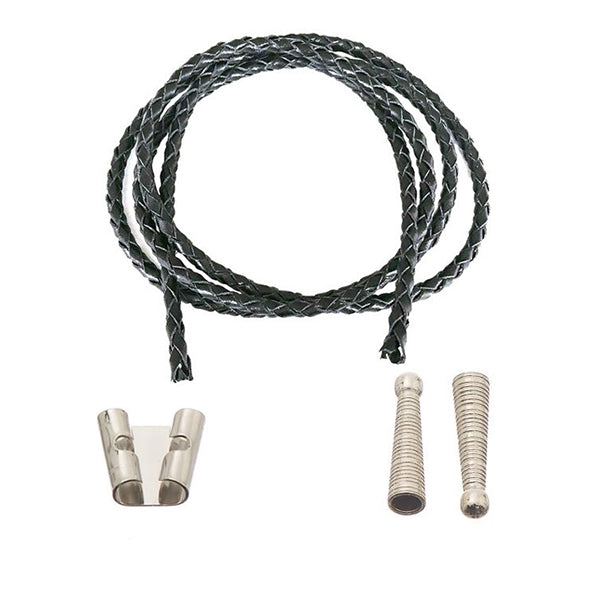
Findings & jewellerySpring-shaped cord endings with an attachment loop. A compatible cord is fitted inside and secured according to the finding’s instructions.
Cold wire work
TechniquesShaping or joining wire without heat, using methods such as bending, wrapping, coiling or hammering. Repeated working can harden the wire.
Collar / dog-collar necklace
Findings & jewelleryA necklace worn closely around the neck, often broad or made with several strands. These style names overlap with “choker” and do not define one fixed length.
Comanche stitch
TechniquesA name used in some beading instructions for brick stitch. Follow the pattern’s thread-path diagram if its terminology differs.
Component
Findings & jewelleryAn individual part used in a jewellery design, such as a clasp, connector, bead or pendant. Findings are the parts used for assembly and fastening.
Cone beads
Shapes & beadsBeads with a cone-shaped body and a hole for stringing. They differ from open end cones made to conceal strand endings.
Cone ends
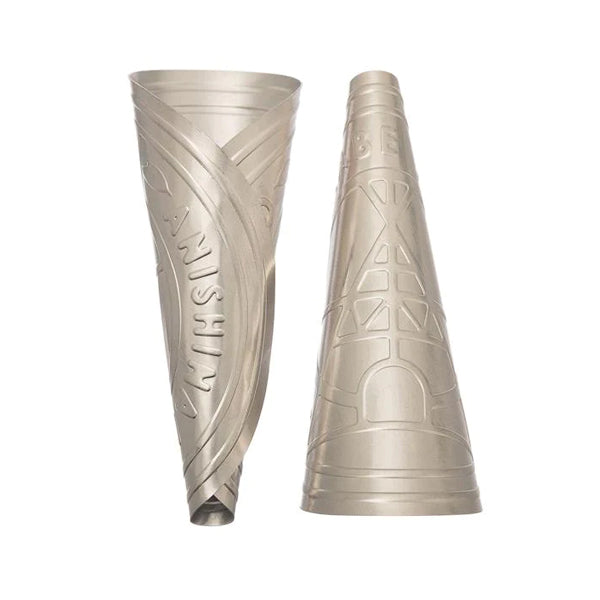
Findings & jewelleryOpen cone-shaped findings that gather strands and conceal their fastenings. Also called bead cones or end cones; they may be used at the top of tassels.
Confetti beads
Shapes & beadsA descriptive name for glass beads decorated with scattered flecks of colour, often small pieces of glass fused onto or into the bead. Effects vary by maker.
Coral
MaterialsAn organic gem material from the skeletons of certain marine animals. Beads may be natural, dyed, stabilized or imitation. Confirm the material and sourcing, and protect delicate coral from scratches and chemicals.
Cord
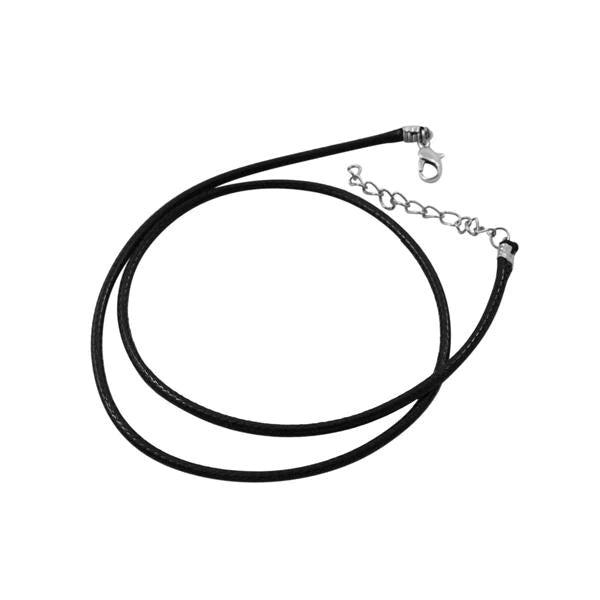
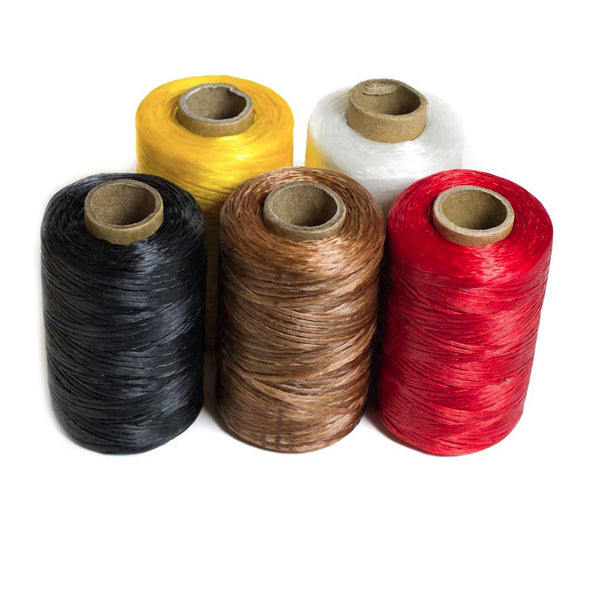
Tools & suppliesA flexible stringing material made from fibres or other materials. Cords may be twisted, braided or solid; check the diameter, stretch and suitable ending method.
Cord ends
Findings & jewelleryFindings used to secure the ends of cord, leather or ribbon and connect them to a clasp. Styles include fold-over, coil and glue-in ends.
Corrugated beads
Shapes & beadsBeads with repeated ridges and grooves. Metal versions are often hollow; the term describes the surface pattern rather than one manufacturing process.
Corundum
MaterialsAn aluminium oxide mineral and the reference for Mohs hardness 9. Ruby is red corundum; other gem colours are called sapphire.
Costume jewellery
Findings & jewelleryJewellery made primarily for its decorative effect, often using non-precious metals, glass, resin or imitation gems. The term does not by itself indicate workmanship or collectibility.
Cowrie / cowry shells
MaterialsMarine shells with a glossy, rounded top and a narrow opening underneath. They are used as ornaments and beads; some are cut or drilled for attachment.
Crackle glass beads
Shapes & beadsGlass beads with a network of internal cracks that catches the light. This is an intentionally produced effect; handle the beads carefully and check for damage around the holes.
Crimp beads
Findings & jewellerySmall metal findings compressed around compatible beading wire to secure an ending or position. Use the correct crimp size and closing method for the wire.
Crimp cover
Findings & jewelleryA split, bead-like cover closed over a finished crimp to conceal it. It improves the appearance but does not replace the crimp’s fastening function.
Crimp tube
Findings & jewelleryA tubular crimp used to secure beading wire. Its size, metal and wall thickness must suit the wire and crimping tool.
Crimping pliers
Tools & suppliesPliers shaped to close compatible crimps. Many use two stages to form and fold a tube, but methods vary; follow the instructions for the particular tool and crimp.
Cross hole
MeasurementsA hole passing across a bead or pendant, often near the top, rather than along its length. Check the hole direction before choosing a bail or stringing method.
Crow / pony beads
Shapes & beadsTrade names for larger beads with generous holes. Sizes and the distinction between the names vary by supplier; compare the actual dimensions and material.
Crystal
MaterialsIn mineralogy, a solid with an ordered internal structure; “rock crystal” means colourless quartz. In bead supplies, “crystal” may instead mean manufactured crystal glass or a colour name.
Crystal glass
MaterialsManufactured glass valued for its optical appearance, often cut into sparkling facets. Both lead-containing and lead-free formulations exist; use the manufacturer’s specifications for the particular range.
Cubic zirconia (CZ)
MaterialsA manufactured zirconium oxide gem material widely used as a diamond simulant. It is different from both diamond and the natural gemstone zircon.
Cuff bracelet
Findings & jewelleryA bracelet that wraps around the wrist with an opening, or a broad bracelet with a fastening. Material and design determine whether it can be adjusted.
Cufflink
Findings & jewelleryA fastening that joins the two sides of a shirt cuff. Cufflink blanks provide a base for decorative tops such as cabochons or metal designs.
Curb-link chain
Findings & jewelleryA chain whose links are shaped and twisted so they lie relatively flat together. Link proportions and thickness vary.
Cutters / side cutters
Tools & suppliesCutting pliers used to trim wire. Match their rating to the wire’s metal and thickness; hardened memory wire requires cutters specifically suited to it.
Dangle
Findings & jewelleryA hanging ornament that moves freely from an attachment point. A bead on a head pin or eye pin is a common example.
Dapping
TechniquesShaping sheet metal into a dome or hollow form using a rounded punch and a matching block or depression.
Delica beads
Shapes & beadsMiyuki’s cylinder seed beads, with straight sides that sit closely together in woven patterns. They differ from round seed beads; dimensions and finish can vary slightly by product and production lot.
Denier
MeasurementsA measure of linear density: the mass in grams of 9,000 metres of fibre or yarn. It is not a direct diameter measurement; equal-denier threads can differ in thickness and construction.
Diamanté
MaterialsA descriptive term for sparkling stones used to imitate the appearance of diamonds, often glass rhinestones. It does not mean that a component contains diamond.
Diamond
MaterialsA crystalline form of carbon and the reference for Mohs hardness 10. Its scratch resistance does not make it unbreakable; diamonds can chip or cleave.
Dichroic glass
MaterialsGlass that shows different colours in reflected and transmitted light. Modern decorative versions often use thin optical coatings to create colour changes as the viewing angle changes.
Disc / disk bead
Shapes & beadsA flattened round bead. The hole may pass through its centre or across its edge, so check the orientation and thickness as well as the diameter.
Dog-collar necklace
Findings & jewelleryA broad, close-fitting necklace style, sometimes made from several strands. Also described as a collar necklace.
Dolomite
MaterialsA calcium magnesium carbonate mineral used in some beads and carvings. It occurs in several colours and needs gentler handling than harder materials such as quartz.
Double nylon-jaw pliers
Tools & suppliesPliers with protective nylon faces for holding or straightening wire with less surface marking. Keep the faces clean and replace them when worn.
Double-cup bead tip
Findings & jewelleryA two-part bead tip that closes around a knot or suitable strand ending. Its attached loop connects the strand to another finding.
Doublet
MaterialsAn assembled gem made from two joined layers. The layers may be natural, manufactured or a combination; check the construction and care requirements.
Doughnut / donut bead
Shapes & beadsA disc-shaped bead or pendant with a large central opening. It may be suspended with a loop of cord or a suitable bail.
Drawn beads
Shapes & beadsGlass beads made by drawing out a hollow glass tube and cutting it into sections. Further heating or finishing can round and smooth the sections.
Drop bead
Shapes & beadsA bead with a rounded or wider end tapering toward a narrower end. The hole may run along its length or across its top, affecting how it hangs.
Druk
Shapes & beadsA term commonly used for round Czech pressed-glass beads. Check the actual dimensions and finish; the name is not a promise of perfect roundness.
Druzy / drusy
MaterialsA covering of tiny crystals on the surface of a rock or mineral. Quartz is common, but druzy describes a texture rather than one mineral species.
Ductility
MeasurementsA material’s ability to deform by stretching, such as being drawn into wire, without breaking. It is different from hardness.
Dumortierite
MaterialsAn aluminium borosilicate mineral, commonly blue in bead materials. Dumortierite may also occur within quartz, so check how the material is identified.
Dyed beads
FinishesBeads coloured by a dye treatment. Resistance to light, moisture and rubbing depends on the material and exact treatment; check the specific colour’s care guidance.
E beads
Shapes & beadsA trade name often used for larger seed beads, commonly size 6/0. It is not a universal size standard or an exact synonym for every pony bead.
Earring clips
Findings & jewelleryFastenings that hold an earring against the earlobe without a piercing. Styles and pressure vary, so comfort depends on the design and fit.
Earring post
Findings & jewelleryThe straight stem of an earring that passes through a pierced ear and is held with a back. The front may have a loop, cup or decorative fitting.
Earrings / ear wires
Findings & jewelleryEarrings are ornaments worn on the ears; ear wires are hook-style findings used for pierced ears. Other earring findings include posts, hoops and clip-ons.
Ebony
MaterialsA dense wood associated with several Diospyros species, often dark brown or black. Some beads sold as ebony-coloured may use another material; check the description.
Elastic thread / stretch cord
Tools & suppliesStretchable stringing material commonly used for slip-on bracelets. Match its diameter and fastening method to the beads and follow the cord maker’s knot and adhesive guidance.
Electroplating
TechniquesUsing an electric current to deposit a layer of metal onto a conductive surface. The coating may be precious or non-precious metal.
Embossed
FinishesDecorated with a raised design or relief pattern. In metalwork, embossing shapes a surface to create the raised effect.
Emerald
MaterialsThe green gem variety of beryl, coloured mainly by chromium and/or vanadium. Inclusions and treatments can affect its appearance and care.
Enamel / enamelled
FinishesVitreous enamel is glass fused to a surface, usually metal, by heat. Some products called “cold enamel” use resin instead, so check the material description.
End bar
Findings & jewelleryA connector that joins or separates multiple strands. Some have several loops on one side and one attachment point on the other for a clasp.
End caps / end cones
Findings & jewelleryFindings that cover or finish a strand, cord or tassel. Some are glued in place, some crimp, and others conceal an internal attachment; use the method intended for that style.
End cutters
Tools & suppliesCutting pliers whose cutting edge is at the end of the jaws. They can trim wire close to a workpiece when their material and size rating allows.
End hole
MeasurementsA hole positioned at the end of a bead or pendant. The term describes its location; it does not necessarily mean the hole stops partway through.
English-cut beads
Shapes & beadsA style of roughly rounded, faceted glass bead with an intentionally irregular appearance. The surface and manufacturing method can vary by maker.
Engraved
FinishesDecorated with lines or a design cut into the surface. Engraving removes material, whereas an embossed design is raised.
Enhancer
Findings & jewelleryAn opening pendant bail or connector that can be clipped over a strand of beads or pearls. Check its opening and closed fit against the strand’s thickness.
Extension chain
Findings & jewelleryA short chain at a necklace or bracelet fastening that allows the wearing length to be adjusted.
Eye
Findings & jewelleryA loop used as an attachment point on a pin, clasp or other component. It may be open, soldered or formed as part of the component.
Eye beads
Shapes & beadsBeads decorated with dots, rings or other motifs resembling eyes. Some have symbolic uses in particular cultures; the motif alone does not establish their origin.
Eye pin / eyepin
Findings & jewelleryA short wire pin with a loop at one end. Add a bead and form a second loop to make a connector or hanging component.
Facet
Shapes & beadsA flat face on a cut or moulded bead or stone. Its angle, position and finish affect how light behaves; facet count alone does not determine sparkle.
Faceted beads
Shapes & beadsBeads with flat faces that reflect light. The facets may be cut, polished or moulded, depending on the material and manufacturing method.
Faux
MaterialsA term meaning imitation. For example, faux pearls are made to resemble pearls but are not natural or cultured pearls.
Faux pearls
MaterialsImitation pearls, often made from glass or plastic with a pearl-like coating. Their weight, appearance and coating durability depend on the product.
Ferrule
Findings & jewelleryA small metal sleeve, band or cap fitted around an end to secure, reinforce or finish it. Its use depends on the component design.
Festoon
Findings & jewelleryA garland-like or draped arrangement in jewellery. The term can describe a necklace style or a decorative connector used as part of a suspended design.
Fibre-optic beads
MaterialsManufactured beads made with bundled glass fibres that create a moving band of light. Commonly sold as cat’s-eye beads.
Filigree
FinishesDelicate ornamental metalwork with a lace-like pattern, traditionally made from shaped wire. Stamped and cast components can reproduce the look.
Findings
Findings & jewelleryThe assembly and fastening parts used in jewellery, such as clasps, ear wires, jump rings, bead tips and pins.
Fine silver
MaterialsSilver of high purity, commonly marked 999 for 99.9% silver. It is generally softer than sterling silver; its suitability depends on the component and design.
Fineness
MeasurementsThe proportion of precious metal in an alloy, commonly expressed in parts per thousand. For example, 925 denotes 92.5% silver.
Fire-polished beads
Shapes & beadsGlass beads whose faceted surfaces are smoothed by heat. This process gives softened facet edges and a glossy appearance. Composition and coatings depend on the particular product.
Fishhook clasp
Findings & jewelleryA clasp with a hook-like tongue that engages inside a decorative body. Also known as a fishhook box clasp; check how its locking mechanism opens and closes.
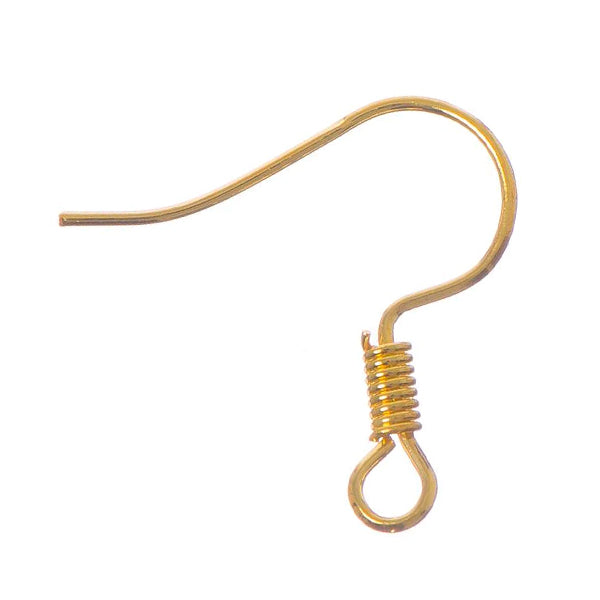
Fishhook ear wires
Findings & jewelleryCurved, hook-shaped earring findings that pass through pierced ears. A loop at the front holds the decorative part. Also called French ear wires.
Flambeau
Shapes & beadsA decorative motif in the shape of a flaming torch. The term can describe jewellery ornaments or components with that design.
Flat-nose pliers
Tools & suppliesPliers with broad, flat inner jaws for gripping, bending and holding components. Smooth jaws reduce marking; use the correct tool when a finding requires a shaped crimp.
Fluorite
MaterialsA calcium fluoride mineral occurring in many colours, often with colour bands. It is the reference for Mohs hardness 4 and can cleave easily, so protect it from impact.
Flush cutters
Tools & suppliesWire cutters designed to leave one side of a cut relatively flat. Check the tool’s wire rating and smooth any sharp edge; flush cutting does not guarantee a burr-free end.
Flux
Tools & suppliesA substance used during soldering to help remove oxides and limit oxidation so solder can flow. Choose a flux suitable for the metals, solder and heating method.
Fob
Findings & jewelleryAn ornament or short chain associated with a pocket watch, or a decorative pendant inspired by that style.
Focal bead
Shapes & beadsThe bead that acts as a design’s main visual focus. It may stand out through size, colour, shape or detail.
Foil-backed
FinishesA stone or glass component with a reflective backing that improves its appearance in a setting. The backing is not the same as a foil inclusion inside a bead.
Foil-lined / foiled beads
MaterialsGlass beads containing a decorative layer of metal leaf or foil. The foil may be precious metal or another metallic material; check the description rather than assuming gold or silver content.
Fold-over clasp
Findings & jewelleryA hinged clasp that folds and snaps shut over its mating part. It is a fastening, distinct from a fold-over cord end.
Folding crimps / fold-over cord ends
Findings & jewelleryCord endings with tabs folded over the cord, leather or ribbon to hold it. Match the size and closing method to the material; use adhesive only when appropriate for the finding.
Formed bead
Shapes & beadsA bead shaped by forming material, often sheet metal or tubing. The term alone does not mean the bead is solid or corrugated.
French ear wires
Findings & jewelleryAnother name for fishhook-style earring wires. They pass through pierced ears and hold a decorative drop at the front.
French wire
Tools & suppliesA fine coil of metal wire placed around thread where it passes through a clasp attachment. Also called gimp or bullion; it helps protect the thread from rubbing.
Freshwater pearls
MaterialsPearls formed in freshwater molluscs. Most sold for jewellery are cultured, and they occur in many shapes, including near-round and baroque. Saltwater pearls also vary in shape.
Fringe
TechniquesLoose hanging strands or loops that add movement to beadwork, jewellery or fabric. Length and thread tension affect how the fringe drapes.
Frit
MaterialsCrushed or granulated glass used for decoration and glassworking. Frit can be fused onto or into a glass bead.
Frosted beads
FinishesBeads with a softened, matte-looking surface that scatters light. The effect may be created by different treatments; it does not identify the underlying material.
Furnace-glass beads
Shapes & beadsArt-glass beads made using hot glass worked at a furnace, often from patterned canes or tubes. Methods and finishing vary by maker.
Galvanized beads
FinishesIn seed bead ranges, this term describes a metallic surface finish. Resistance to rubbing and perspiration varies by colour and treatment, including whether a protective finish is used.
Garnet
MaterialsA group of related minerals used as gemstones. Red is familiar, but garnets also occur in green, orange, pink and other colours.
Gauge
MeasurementsA numbering system for wire thickness. In American Wire Gauge (AWG), larger numbers mean thinner wire. Other gauge systems differ, so confirm the system or use the stated millimetre diameter.
Gemstone
MaterialsA material valued for jewellery or ornament, including minerals, rocks and organic materials such as pearl and amber. Descriptions should distinguish natural, laboratory-grown, treated and imitation materials.
Ghost beads
FinishesA supplier finish name sometimes used for translucent matte beads with an iridescent coating. It is not a standardized finish across all brands; check the exact colour description.
Gimp
Tools & suppliesIn bead stringing, another name for French wire: a fine metal coil used to protect thread at a clasp connection.
Girandole
Findings & jewelleryA jewellery design, especially an earring, with three hanging ornaments suspended from an upper element.
Givré
MaterialsA glass effect combining transparent areas with cloudy or opaque colour inside. Often seen in vintage beads; the exact pattern and colour distribution vary.
Glass-blown beads
Shapes & beadsHollow beads formed by inflating hot glass. They can be made in different glassworking traditions and locations; “blown” does not by itself mean Murano or Venetian.
Glaze
FinishesA glassy coating fired onto ceramic material to change its appearance and surface. A glaze does not automatically establish that an item is waterproof or suitable for every use.
Glue
Tools & suppliesAn adhesive used to join compatible jewellery materials. Follow the product’s application and curing instructions.
Gold colour
FinishesA description of appearance, not a statement of gold content. A gold-coloured component may use a non-gold coating or alloy; check the material specification.
Gold-filled
MaterialsA layer of gold alloy mechanically bonded to a base metal. A mark such as 1/20 14K identifies the gold layer as 14 karat and one-twentieth of the item’s weight. It is different from solid gold.
Gold-foil beads
MaterialsBeads incorporating gold leaf or gold-coloured foil, commonly within glass. Check whether the product specifies genuine gold or only a gold appearance.
Gold-lined / gilt-lined
FinishesA glass bead with a gold-coloured lining inside its hole. The name alone does not confirm genuine gold content or a particular durability rating.
Gold-plated
MaterialsA component coated with a layer of gold over another material. The base, gold purity and coating thickness affect its performance; plating is different from gold-filled construction.
Gold-tone / gold-finished
FinishesTerms describing a gold-coloured appearance. They do not establish that a component contains gold; consult its material details.
Goldstone
MaterialsManufactured glittering glass containing tiny metallic crystals. It is also called aventurine glass and is different from natural aventurine quartz.
Gram
MeasurementsA metric unit of mass used to sell many beads by weight. There are 1,000 grams in 1 kilogram. The number of beads in a gram depends on their size, material and finish.
Ground stitch
TechniquesA context-dependent stitch name. In embroidery it can mean a stitch used to fill a background; some beadwork instructions use it differently. Follow the pattern’s thread path rather than assuming one universal stitch.
Guard chain / safety chain
Findings & jewelleryA short secondary chain attached across a fastening to help retain the jewellery if the main clasp opens. Its length and connections must suit the piece.
Guilloché
FinishesA precise, repeating engraved pattern, often made by engine turning. Transparent enamel may be applied over the pattern, but the engraving itself is the guilloché work.
Gypsum
MaterialsA calcium sulphate mineral and the reference for Mohs hardness 2. Its fine-grained alabaster form can be carved, but it is soft and easily scratched.
Half-coated beads
FinishesBeads with a surface effect applied to part of the exterior. Coverage and terminology depend on the manufacturer; compare the product with its full-coated version where available.
Half-drilled beads
MeasurementsBeads or pearls with a hole that stops inside the body rather than passing all the way through. The hole depth is not necessarily exactly half the bead’s width.
Hallmark
MeasurementsAn official mark used in some countries to indicate that precious-metal content has been tested. Marking systems vary; a fineness stamp or maker’s mark is not necessarily an independently verified hallmark.
Hammered metal
FinishesMetal shaped or textured by repeated hammer blows. Hammering can also work-harden the metal, depending on the material and process.
Hand-knotted
TechniquesStrung with knots tied by hand, often between individual pearls or beads. Knots separate neighbouring beads and can limit how many are lost if a strand breaks.
Hank
MeasurementsA bundle of strung bead strands. Strand count, length and weight vary by bead type and supplier, so a hank is not one universal quantity.
Hat pin
Findings & jewelleryA long pin with a decorative head, traditionally used to secure a hat. Modern versions may be decorative; the sharp end needs an appropriate guard.
Head pin
Findings & jewelleryA short wire pin with a flat or decorative stop at one end. The stop holds a bead while the other end is formed into a loop for attachment.
Heat treatment
TechniquesControlled heating used to alter a gem’s colour, clarity or other characteristics. It is a treatment, not a different gemstone identity; the effect depends on the material.
Heirloom beads
MaterialsBeads or jewellery passed down within a family. The term describes their history or significance rather than a particular age or material.
Heishi / heishe beads
Shapes & beadsSmall disc or short tube beads, traditionally made from shell or stone and closely associated with Kewa (Santo Domingo Pueblo) jewellery. Commercial heishi-style beads also come in other materials.
Heishi bar
Findings & jewelleryA narrow spacer bar with multiple holes, used to keep strands parallel. Choose the hole spacing and size to suit the beads and stringing material.
Hemalyke
MaterialsA trade name for manufactured hematite-like bead material. Do not identify it as natural hematite from appearance alone; composition and magnetic properties depend on the product.
Hematite / haematite
MaterialsAn iron oxide mineral that can show a metallic grey-black polish. Manufactured magnetic lookalikes are also sold; strong magnetism alone is not proof of natural hematite.
Hemimorphite
MaterialsA zinc silicate mineral that may be colourless, white or pale blue, among other colours. It is relatively soft and brittle compared with many jewellery stones.
Hemp
Tools & suppliesA plant fibre taken from the stem’s bast, or outer fibrous layer. Hemp cord is used for knotting and macramé; texture and thickness vary.
Herringbone stitch
TechniquesA bead-weaving stitch in which paired beads lean toward each other to form repeated V shapes. It can be worked flat or as a tube.
Hessonite
MaterialsAn orange to brown variety of grossular garnet, sometimes called cinnamon stone. “Hassonite” is a misspelling found in some descriptions.
Hex-cut beads
Shapes & beadsSeed beads or small tube beads with a six-sided outer profile that creates flat reflective faces. Check the manufacturer’s range and dimensions.
Hexagonal beads
Shapes & beadsBeads with a six-sided outline or cross-section. They may be flat, elongated or another form, so check the dimensions and hole layout.
Hidden screw clasp
Findings & jewelleryA screw fastening concealed within beads or decorative end pieces. The two parts join by turning rather than snapping or hooking.
Hollow beads
Shapes & beadsBeads with an empty interior, often made from metal or blown glass. They can be lighter than solid beads of a similar size; wall thickness affects their strength.
Hook-and-eye clasp
Findings & jewelleryA fastening made from a hook and a matching loop or eye. Shape, fit and the tension of the jewellery affect how securely it stays closed.
Howlite
MaterialsA naturally white calcium borosilicate mineral, often with grey veining. It can be dyed to imitate other stones, especially turquoise, so check the stated identity and treatments.
Illusion cord
Tools & suppliesFine, usually clear stringing material used to make beads appear to float. Material, flexibility and suitable knotting or fastening methods vary by product.
Illusion setting
Findings & jewelleryA setting with reflective metal around a stone to make its outline appear larger or emphasize its brightness.
Imperial jade
MaterialsA trade description for exceptionally fine, vivid green jadeite with desirable translucency. It describes a quality and appearance, not a separate mineral species.
Incised
FinishesDecorated with lines or patterns cut into the surface. Similar in meaning to engraved.
Inclusions
MeasurementsFeatures inside a gem, such as mineral crystals, fluids or growth structures. They occur in natural and laboratory-grown materials and can affect appearance, identification or durability.
Ingot
MaterialsMetal cast into a bar or another convenient shape for storage or further working. Its shape alone does not establish purity.
Inlay / inlaid
TechniquesA design made by fitting one material into recesses in another surface, usually finishing them level. Stone, shell, glass and metal are common inlay materials.
Inside colour / colour-lined
FinishesColour applied inside a glass bead’s hole. The transparent or translucent outer glass lets the lining show through and influence the bead’s appearance.
Intaglio
TechniquesA design carved below the surrounding surface of a stone, glass or other material. It can be cut into the front or reverse; it is the recessed counterpart to a raised cameo.
Iolite
MaterialsGem-quality cordierite, commonly blue to violet. It can show markedly different colours when viewed from different directions.
Iridescent beads
FinishesBeads showing rainbow-like colours that change with the light or viewing angle. The effect can come from a surface treatment or the material itself; it does not establish composition or durability.
Iris
FinishesA finish name commonly used for rainbow or metallic-looking effects, often on darker beads. The exact treatment and resistance vary by manufacturer and colour.
Irradiation
TechniquesExposure to radiation to alter a gemstone’s colour. It is one of several gem treatments; the result and any subsequent treatment depend on the material.
Ivory
MaterialsDentine from animal teeth or tusks, historically used for carving and beads. “Ivory-coloured” describes a shade and may refer to plastic, glass or another material.
Ivory clasp
Findings & jewelleryA name found in older listings for an ivory-coloured or concealed screw clasp. Do not assume it is made from ivory; check both the material and mechanism.
Jade
MaterialsA gem name commonly applied to jadeite and nephrite; certain omphacite-rich materials may also qualify. These materials differ from stones merely sold under jade-like trade names. Check the identification and treatments.
Jasper
MaterialsAn opaque, fine-grained silica-rich material, commonly patterned by mineral inclusions. Bead trade names can also be applied to other rocks, so confirm the material rather than relying only on a pattern name.
Jet
MaterialsAn organic gem material derived from ancient wood, often described as a compact variety of lignite. It can take a dark polish and is different from black glass or plastic imitations.
Jewellery tag
Findings & jewelleryA small tag attached to a piece for a maker’s name, logo, material information or decoration. A tag alone does not verify the metal content.
Jewellery wire
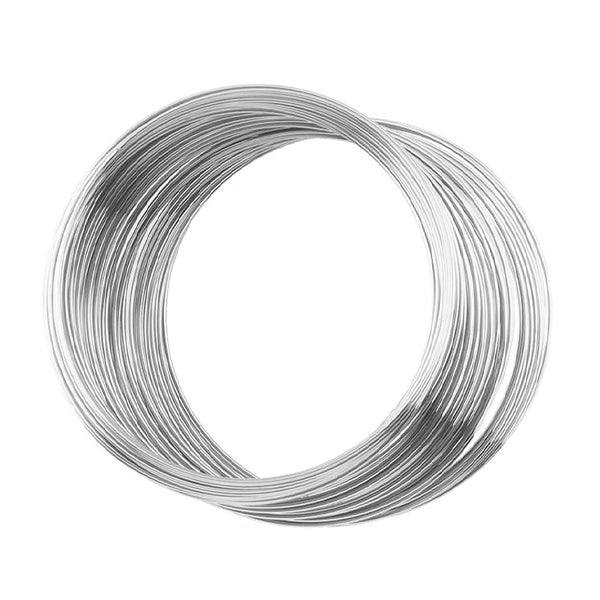
Tools & suppliesSingle wire used to form loops, pins, wraps and other structures. Check its metal, diameter and temper. It differs from flexible multi-strand beading cable.
Jig
Tools & suppliesA template or peg board used to bend wire into repeatable shapes. Peg spacing and wire properties affect the finished form.
Jump rings — closed / soldered
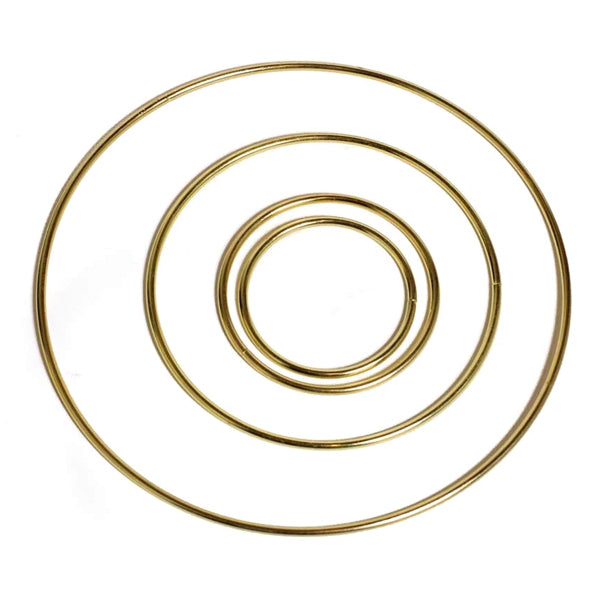
Findings & jewelleryRings with a continuous or joined circumference that cannot be opened like ordinary jump rings. Thread components through them or connect them with another finding.
Jump rings — open
Findings & jewelleryMetal rings with a gap for connecting components. Open them by twisting the ends sideways, then align the ends carefully when closing; pulling the ring wider can distort its shape.